Tips and Tricks for Choosing a Responsible Contractor Experienced in Solving Project Challenges

Developing a property—whether a private residence, a luxury villa, or a commercial hospitality asset—is a major long-term capital investment. However, on-site challenges are often unavoidable, ranging from complex terrain and unpredictable weather to supply chain fluctuations and local regulatory hurdles. This is where a contractor’s true value is put to the test.
Selecting the right builder is never about finding the lowest bid; it is about partnering with a responsible contractor who possesses a proven track record in on-site problem-solving. To protect your investment from costly delays, structural defects, or budget overruns, apply these practical strategies before signing a construction contract.
1. Inspect Real Completed Projects, Not Just 3D Renders
While 3D architectural visualizations look impressive on screen, physical execution on the ground is the true benchmark of a construction firm’s technical competence.
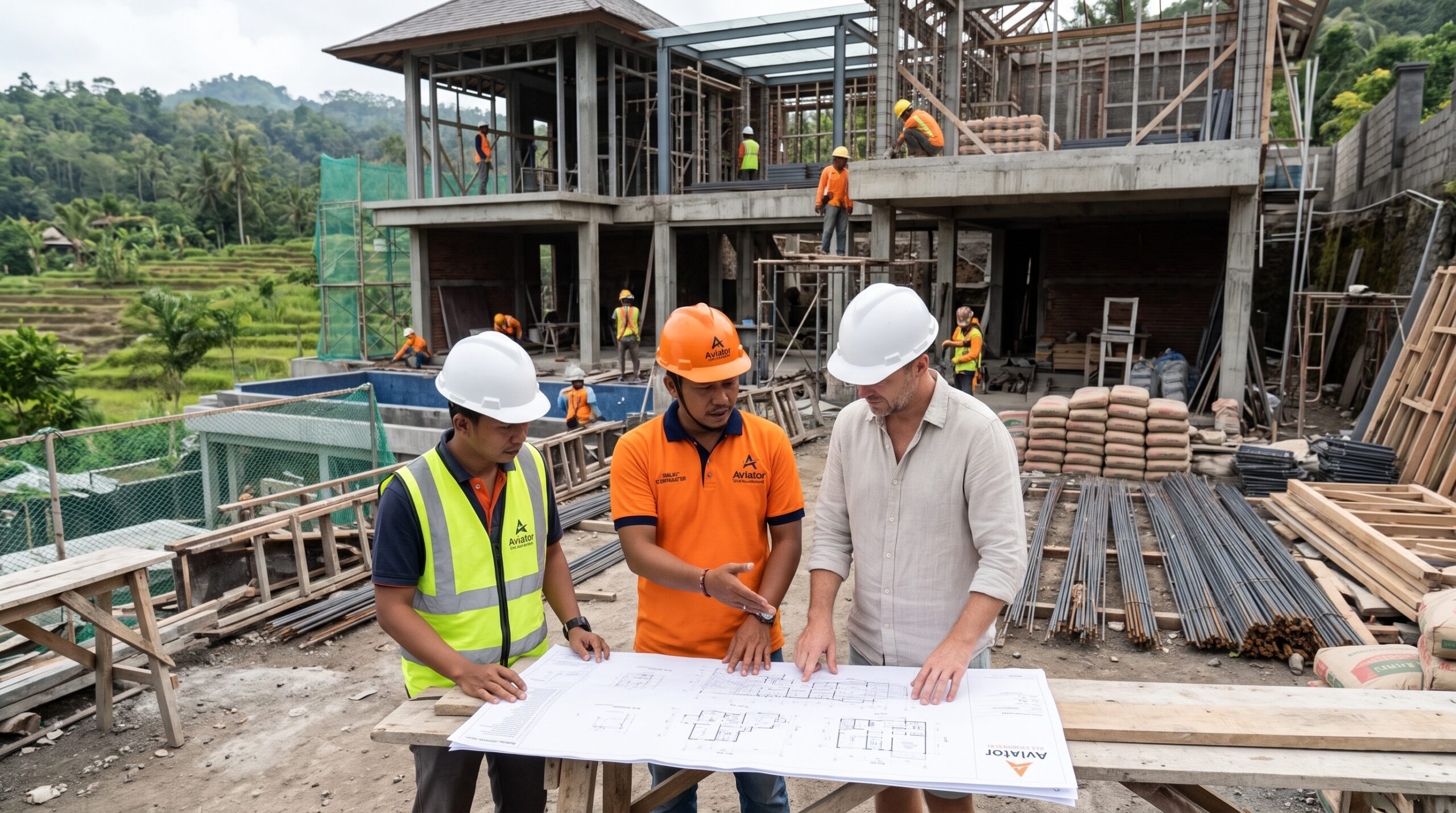
Conduct Active Site Visits: Visiting an ongoing project site reveals a contractor’s real-world standards in workplace safety, material organization, and site supervision discipline.
Evaluate Complex Engineering Builds: Ask about the most technically demanding projects they have executed—such as sloping cliffside builds, rugged limestone excavation, or structural infinity pools—and how their engineering team overcame those challenges.
2. Verify Company Legality and In-House Technical Expertise
A responsible contractor operates under a transparent corporate structure rather than acting as an informal broker without dedicated engineering oversight.
Check Corporate Registration & Regulatory Knowledge: Ensure the company holds valid business licensing (PT/PMA), a verifiable physical office, and deep familiarity with Indonesian building regulations, including PBG (Building Approval) and SLF (Certificate of Worthiness).
Integrated Multidisciplinary Team: Confirm that they maintain dedicated in-house specialists—including civil engineers, architects, site managers, and MEP (Mechanical, Electrical, and Plumbing) supervisors.
3. Test Their Problem-Solving Mindset During Initial Consultations
During early discussions regarding architectural drawings and your Bill of Quantities (BoQ), pay close attention to how the contractor approaches potential risks.
Proactive Technical Solutions: Experienced contractors do not simply say “yes” to everything just to win a contract. Instead, they review blueprints critically, flag potential vulnerabilities (such as drainage, waterproofing, or structural steel spans), and propose practical engineering solutions that optimize cost and durability.
Structured Risk Management: Ask how they handle supply chain bottlenecks or extreme tropical weather to ensure your handover timeline stays on track.
4. Demand a Transparent Bill of Quantities (BoQ) and Milestone Payments
Most construction disputes stem from vague pricing structures and undefined material specifications at the outset of a project.
Itemized Material Specifications: A professional BoQ explicitly details brands, grades, volumes, and finishes—from concrete strength and rebar sizing to waterproofing membranes and joinery materials.
Progress-Based Payment Milestones: Avoid paying disproportionately large upfront deposits without verifiable progress. Credible contractors structure payment schedules strictly around completed physical milestones on site.
5. Ensure Consistent Site Supervision and Transparent Reporting
For property owners and overseas investors who cannot monitor the site daily, structured reporting provides essential peace of mind.
Regular Progress Reports: Confirm that the contractor provides weekly or bi-weekly updates featuring high-resolution photo/video documentation, S-curve progress tracking (planned vs. actual timelines), and transparent financial summaries.
Dedicated Point of Contact: Having an assigned Project Manager ensures that technical decisions and client inquiries are addressed swiftly and accurately.
6. Check the Maintenance Warranty (Retention Period) in the Contract
A contractor’s accountability does not end on handover day. A well-structured construction agreement always includes a retention or defect liability period (typically 3 to 6 months post-handover). During this window, the contractor is legally obligated to rectify any minor defects—such as hairline plaster cracks, waterproofing adjustments, or plumbing fine-tuning—at zero additional cost to the owner.
Build Your Project With a Proven Construction Partner
Partnering with a contractor who brings hands-on problem-solving experience is the smartest way to safeguard your timeline, budget, and asset value. With rigorous planning, transparent cost control, and uncompromising engineering standards, every on-site challenge can be resolved with precision.
Planning a luxury villa, boutique hotel, or commercial development in Bali? The multidisciplinary team at Aviator Bali Construction delivers full-cycle construction management—from architectural planning and PMA/PBG permit support to structural engineering, pool construction, and custom furniture built to investor-ready standards. [Contact our team today] to schedule a consultation for your upcoming project!
Tags
- Tips and Tricks for Choosing a Responsible Contractor Experienced in Solving Project Challenges